
Guides
Beach Yoga in Miami: The Complete Guide
Best times, where to practice, what to bring and how to keep sand off your mat: our complete guide to beach yoga in Miami.
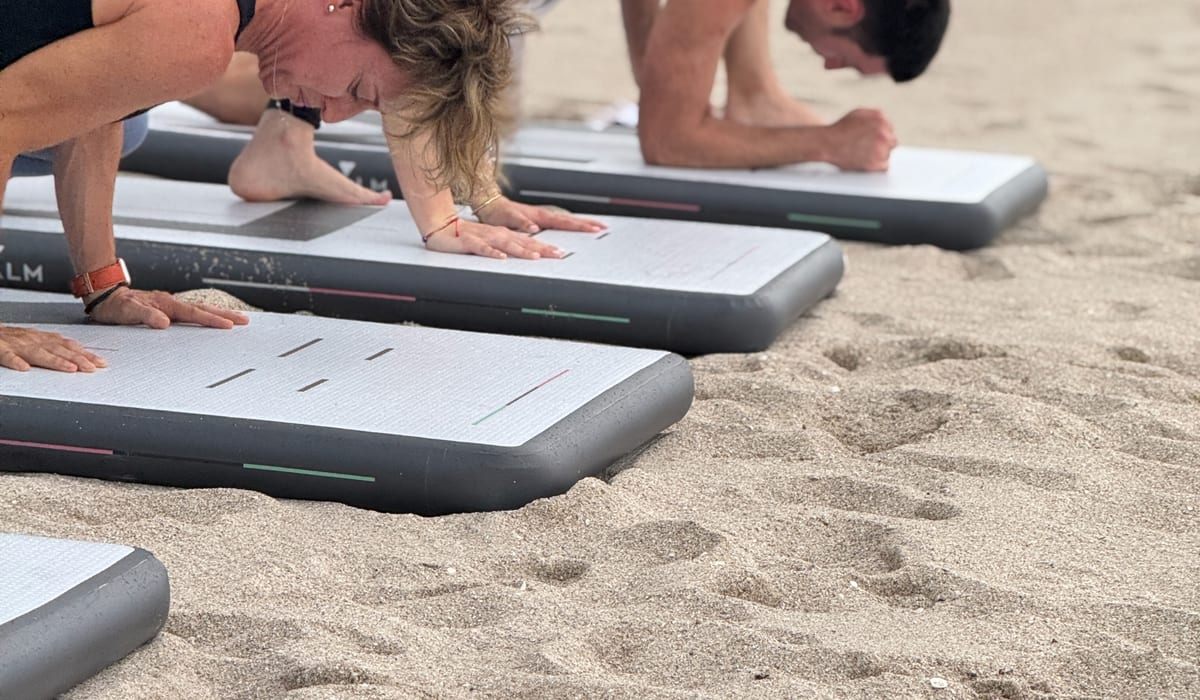
Miami has one of the best settings in the world for yoga on the beach: warm water, soft sand and sunrises over the Atlantic almost every day of the year. At Kalm, we've spent years running beach yoga classes, private sessions and wellness events along this coast. This guide covers what we've learned about when to go, what to bring, and how to make your practice on the sand feel as stable as it does in a studio.
Why practice yoga on the beach?
Practicing outdoors changes the experience. The sound of the waves slows your breath, the morning light wakes you up, and the open horizon gives the mind room to settle. Many people find that a beach class feels less like a workout and more like a reset.
The sand also adds a challenge. It shifts under your hands and feet, so small stabilizing muscles work harder in every pose. That's great for balance and strength, but it's also why most beach practices get uncomfortable: the surface is uneven, the mat slides, the corners fold in the wind, and sand ends up everywhere.
The best time for beach yoga in Miami
- Sunrise (around 6:30–8:00 am): cooler air, calm water, fewer people and the best light. This is our favorite slot.
- Sunset (about an hour before dark): softer heat and a beautiful close to the day, though beaches are busier.
- Season: November to April is peak beach yoga season in Miami, with lower humidity and milder temperatures. In summer, stick to early mornings and bring extra water.
Always check the tide and the wind before you go. Low tide gives you more flat, firm sand to set up on.
Where to practice
Look for a wide, quiet stretch of beach with firm sand near the waterline and easy access to restrooms and parking. Many Miami and Miami Beach hotels offer beach yoga for guests, and community classes pop up along the coast throughout the season. If you're organizing a group, check the local rules for classes and events on public beaches.
What to bring
- A surface that works on sand (more on this below)
- Water and a small towel
- Reef-safe sunscreen, applied 20 minutes before class
- Light, breathable clothing
- A bag to keep your phone and keys out of the sand
The mat problem: how to keep sand off your practice
A regular yoga mat isn't made for the beach. It sinks unevenly into the sand, picks up grains on both sides, and the edges lift with the breeze. Towels are even worse: they bunch up and slide as soon as you move.
That's why we created the KORE Beach Yoga Board, an inflatable board designed specifically for yoga on the sand. It gives you:
- A firm, level surface, even on soft or uneven sand
- Sand resistance: the smooth surface brushes clean and sand doesn't stick
- No flipping corners in the wind
- Portability: it deflates and rolls into a carry bag, with a pump included
Put your favorite mat on top of the board for extra grip. Our Elemental natural-rubber mats work well here: they're non-slip and made from sustainable materials.
👉 See the KORE Board and Elemental Mats
A simple 15-minute beach flow
- Seated breathing (2 min): sit facing the water and breathe slowly through the nose.
- Cat-cow (1 min): warm up the spine.
- Sun salutations ×3 (4 min): move with the breath.
- Warrior II and triangle (3 min per side): feel the horizon line.
- Tree pose (1 min per side): let the ocean breeze test your balance.
- Savasana (3 min): close your eyes and listen to the waves.
Silent beach yoga: a different experience
At our events we often run silent yoga on the beach: every participant wears wireless Sound Off headphones that carry the instructor's voice and the music directly to their ears. Nobody shouts over the wind or the waves, the group can spread out, and it feels completely immersive. It's one of the most requested experiences at hotels and corporate events.
Bring beach yoga to your hotel, studio or event
Kalm works with hotels, studios and event organizers to run beach yoga classes and outdoor wellness experiences, with boards, mats, headphones and certified instructors included.
👉 Book a beach yoga experience · Wholesale for studios and hotels
FAQ
Is beach yoga harder than studio yoga? The unstable surface makes balance poses more challenging, which is part of the benefit. A firm board makes it feel much closer to a studio.
Can I use a regular yoga mat on the sand? You can, but it will collect sand and shift as you move. A board under your mat solves both problems.
What should beginners know? Go early, keep the flow simple, stay hydrated, and choose a flat spot near the waterline.
Be Kind. Be Kalm. Be Real.